Online Therapy for AuDHD in Wisconsin
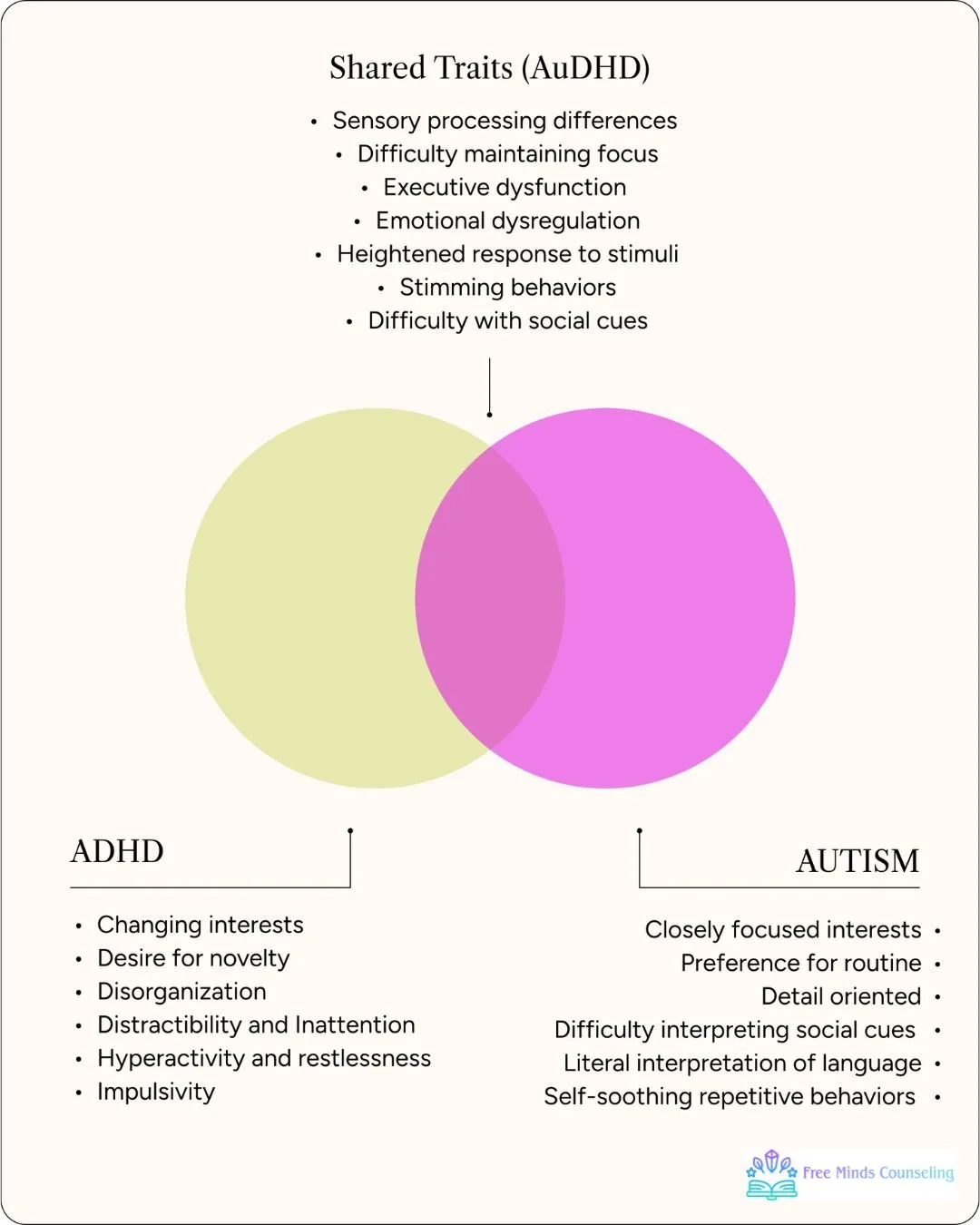
AuDHD is a new term that’s being used to describe people who have both autism and ADHD. It’s not an official diagnosis but is meant to draw attention to the combined effect of having the two disorders.
Having both autism and ADHD is very common — studies estimate that 50 to 70 percent of people with autism spectrum disorder also have ADHD (though most people with ADHD do not also have autism).
It’s only since 2013 that the possibility of having both was recognized in the DSM-5, the guide to mental health disorders. Before that the two diagnoses were considered mutually exclusive. But mounting evidence of how common it is to have symptoms of both, and more recognition of the frequency with which people have several related developmental disorders, led to a change in the guidance.
Since the combination has only been recognized so recently, there is a limited amount of research on how people are affected by having both disorders, says Conner Black, PhD, associate director of the Autism Center at the Child Mind Institute. The term AuDHD was coined by autism advocates to highlight the experience of having symptoms of both, because they can interact in confusing ways.

What are the symptoms of auDHD?
Autism and ADHD are both neurodevelopmental disorders, and each involve issues with attention, social challenges, and difficulty regulating emotions. To understand the experience of a dual diagnosis, we must examine the behaviors associated with autism vs. ADHD — and how they might interact.
Attention issues
Autism: People with autism tend to focus intense attention on their specific interests, and they have difficulty shifting attention between tasks or on demand. Inattention in autistic people is more because the person is self-directed and more interested in what they want to do at that time.
ADHD: ADHD makes it unusually difficult for people to concentrate and follow directions. People with ADHD are inattentive because it’s hard for them to focus on a specific task or specific activity.
AuDHD: Attention challenges are exacerbated in people with both. They may be inflexible about what they will pay attention to — wanting to focus on a special interest at the cost of something else, for example — and also genuinely struggle to pay attention to things that aren’t of personal interest.
Social challenges
Autism: People with autism have trouble reading nonverbal cues and having back-and-forth conversations.
ADHD: People with ADHD can struggle socially because they are impulsive, tend to interrupt, and have trouble listening to others and taking turns.
AuDHD: People with both can have trouble reading social cues and understanding the natural flow of conversation, but then they also might have difficulties with impulsivity, waiting for their turn to talk. Their social challenges can be compounded.
Emotion regulation
Autism: People on the autism spectrum can have difficulty managing big emotions, which can lead them to act out. They may experience emotional distress as a result of sensory overload, unexpected change, or social confusion, which can cause them to melt down. The outbursts may seem sudden, but that’s often because they’re not cued into their own emotions or how their body is affected by them, so they don’t know how to recognize their emotional reaction building up.
ADHD: People with ADHD can also have difficulty managing big emotions, but the outbursts are often the result of frustration or impulsivity. In ADHD, you often see these extreme emotional reactions, where people seem to go immediately from zero to 100 as a reaction to an event.
AuDHD: For people with autism and ADHD, we often see big behavioral episodes, whether that’s being aggressive or having some kind of meltdown. The two of them together exacerbates some of those challenges.
Feeling Better Starts Here
Individuals of all ages with a reliable internet connection and camera-enabled device can gain access to quality mental healthcare
Confidential
Online therapy sessions take place on a secure server and can only be accessed by your therapist, so you never have to worry.
Convenient
Meet with a therapist from the comfort of your own home at a time that fits your schedule and avoid the stresses of travel.
Insurance Accepted
Affordable Quality Care
Insurance will often cover the majority of your services. We can verify your insurance benefits and provide you with a cost estimate.
Easy to Use
To access a video session, you simply follow a link sent to you by your therapist. No additional software downloads are required.
Frequently Asked Questions
-
Once your appointment is scheduled, an email will be sent for you to set up your portal account. A second email will include links to access needed registration paperwork. A reminder email for your appoinment will include the link to your session. In order for the session to work, you must have a reliable internet connection and camera on the computer or phone you are using.
-
Getting started is simple. Reach out through our contact form or schedule a short consult here
-
In addition to being an experienced therapist, I have navigated my own struggles as a very late diagnosed AuDHD person. I also bring a lifetime of experience as a gamer, and member of a variety of alternative communities to the table to help craft interventions that fit YOU.
-
You can reach us anytime via our contact page , email or schedule a short consulation. We aim to respond quickly—usually within one business day.
-
A major goal is accessibility. Reduced rates can be arranged for those without insurance or who choose not to use insurance.
-
While I can work with clients as young as 14, parents will need to be involved unless special circumstances exist.
Parents do not get access to anything spoken about without direct and clear permission from you.